Anxious Attachment After a Breakup: Grief and Letting Go

When a relationship ends, the ending is rarely the end of it. The conversation may be over and the decision made, but something keeps going. Many people find their thoughts turning to the other person as soon as they wake. The phone gets checked almost automatically. Old conversations get replayed, searching for the moment things might have gone differently.
For people with an anxious attachment style, this can feel overwhelming. It isn't weakness, and it isn't a case of loving "too much." It's a nervous system that learned early on that closeness could be lost, and that has now lost it.

What anxious attachment is
Attachment styles are the patterns we develop, usually in childhood, for how safe closeness feels. When early care was loving but unpredictable, sometimes there and sometimes not, a child can learn to stay alert to any sign that connection is slipping away. They learn to watch closely, to work hard to keep people near, and to feel the gaps very keenly.
In adult relationships this can show up as needing reassurance, noticing small changes in tone, and feeling calm mainly when the other person feels close. When a relationship ends, all of that can go into overdrive.
The first weeks: needing access
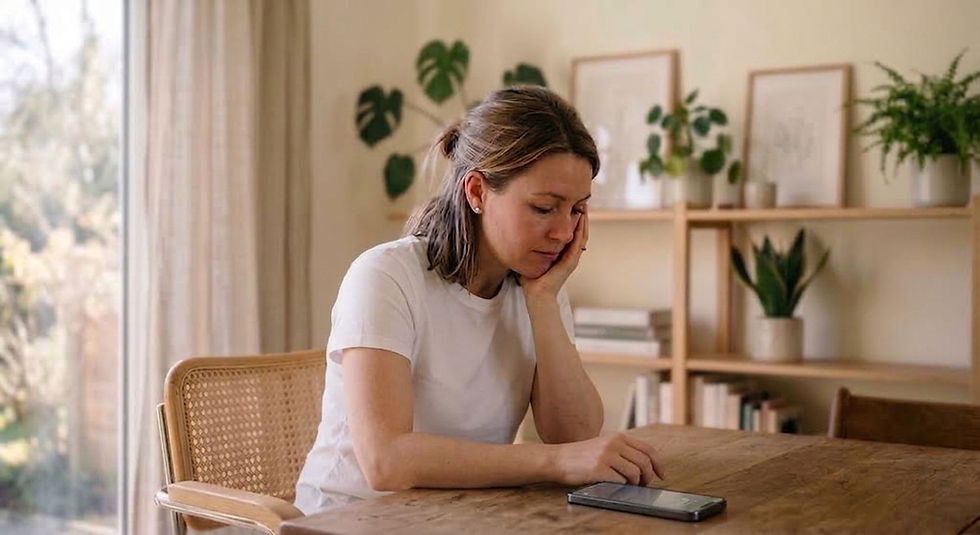
In the immediate aftermath, a lot of energy tends to go towards one thing: access. Wanting to know what the other person is doing, who they're with, and whether or when they might come back. Proximity, even at a distance, can feel like a lifeline.
WhatsApp can become a window that's hard to stop looking through. Checking "last seen." Waiting for "online" to appear. Noticing whether a message got two grey ticks or two blue ones, and how long the blue took. Where there's still some contact, its rhythm can take on huge meaning. A quick reply feels like warmth. A gap of a day feels like rejection. Each new message can bring a small jolt of hope, and a story starts to form from whatever fragments are available. They were online at 2am. They changed their profile picture. They used a kiss.
With anxious attachment, this checking makes sense. It's the old strategy doing its job: watch closely, stay near, don't miss the signs. The person who has gone was also part of how the body settled. Their messages, their voice, and the sense that they were there all helped keep anxiety at bay. When that disappears, the system keeps reaching for them. Each bit of contact can bring a moment of relief, and then the craving returns. For some people it feels less like sadness and more like withdrawal.
Idealising is common too. Anxious attachment can come with a quiet belief that other people are more worthy, and after a breakup that belief can get louder. The good times come back in vivid detail and the difficult ones fade. The other person is held in a warm light, while a harsher light gets turned inwards. If only I'd said this. If only I hadn't needed so much. Self-blame can feel like taking responsibility, but it's often closer to trying to regain control. If it was my fault, maybe it can still be fixed.
This phase can be intense, and it's normal. It's also rarely the right time for deep reflection, because everything feels too unsettled for that.
How grief shapes feelings and behaviour
Grief doesn't just hurt. It can change how things look.
In the middle of a loss, it can be hard to see the relationship clearly. Someone who caused months of anxiety can start to seem like the only person who ever really understood. A relationship that came with real doubts can look, in hindsight, like the best thing that ever happened. That isn't a failure of judgment so much as grief doing its work. The mind holds on to what it has lost, and it tends to hold on to the best version. With anxious attachment, anxiety itself can also be mistaken for love. The more unsettled someone made us feel, the more they can seem to matter.
Avoiding grief can distort things just as much. When the pain feels like too much, it's natural to look for a way around it. For some people with anxious attachment, that means reaching: going back, sending the message they'd decided not to send, or finding someone new quickly so the gap doesn't have to be felt. Others turn it into anger, which can feel easier to hold than sadness, or stay busy enough not to feel much at all. These are ways of protecting ourselves, and they make sense. But the feelings they keep out of view don't disappear. They can carry on shaping decisions: who gets a message at midnight, what story gets told about what happened, and what feels acceptable next time.
Loneliness adds its own pull, and anxious attachment can make it louder. When a relationship ends, it isn't only the person who goes. So do the texts through the day, someone to tell things to, someone to come home to, and the ordinary sense of being known. That emptiness is easy to mistake for missing that particular person. Sometimes it's the gap they filled, and in the quiet of an evening, almost anyone familiar can start to feel like the answer. Loneliness can make an old relationship look better than it was, make going back feel reasonable, and make it harder to wait for something that actually fits.
So part of grieving well can be getting curious about what's doing the driving. Is this a genuine feeling about the relationship, or is it the loss, the loneliness, or an old fear of being left? Is it this person that's missed, or not being alone? Often the honest answer is a bit of both, and it can still help to tell them apart.
What was the relationship really about?
Once things settle, a harder question may come into view: what was the relationship actually about? Was it about two people getting to know each other, or had it become more about having someone there at all?
It can be worth reflecting on how we showed up. Was there enough steadiness to bring something to it, such as opinions, needs, and the parts of ourselves that didn't always fit? Or did most of the energy go into holding on, managing the fear of losing it and keeping things smooth? Anxious attachment can mean a lot of effort goes into keeping a connection safe, which leaves less room for actually being in it.
Neither answer makes someone a bad partner. Many people come into relationships without the stability or confidence to offer much more than their presence, often because nobody offered them much more either. But it can change what's being grieved. Sometimes it's a real person and a real connection. Sometimes it's the comfort, the company, and the relief of not being alone. Often it's a mix, and being honest about that mix is where useful learning can begin.
Our part in it
It's often only once the dust settles, and sometimes only after a few relationships have ended in a similar way, that a different question becomes possible: what part might I have played in how this unfolded?
This isn't about blame. Relationships are co-constructed. Each person brings their history, their fears, and their ways of protecting themselves, and the relationship takes shape in the space between them. People with anxious attachment are often drawn to partners who keep some distance, and the two patterns can feed each other. The more one person reaches, the more the other pulls back, and the more they pull back, the harder the first person reaches. Neither causes the pattern alone, and neither can end it alone.
Recognising a part in it isn't the same as accepting fault. It's acknowledging being an active participant, rather than someone things simply happened to. That can be freeing. If we contributed to a dynamic, we also have some power to do things differently next time.
When it helps to talk
When the same kind of ending keeps happening, with the same checking and the same questions, it may be less about any one person and more about a pattern that started long before them.
Therapy can offer space to slow down and look at that honestly: what was being reached for, what was being protected, and what might be different. Within a steady, reliable relationship, it's possible to feel safer in yourself, so that future relationships have a better chance of being about two people, rather than about the fear of being left.
If a breakup feels harder to move through than it should, you don't have to work it out on your own.
Written by Layla Eissa MBACP


Comments